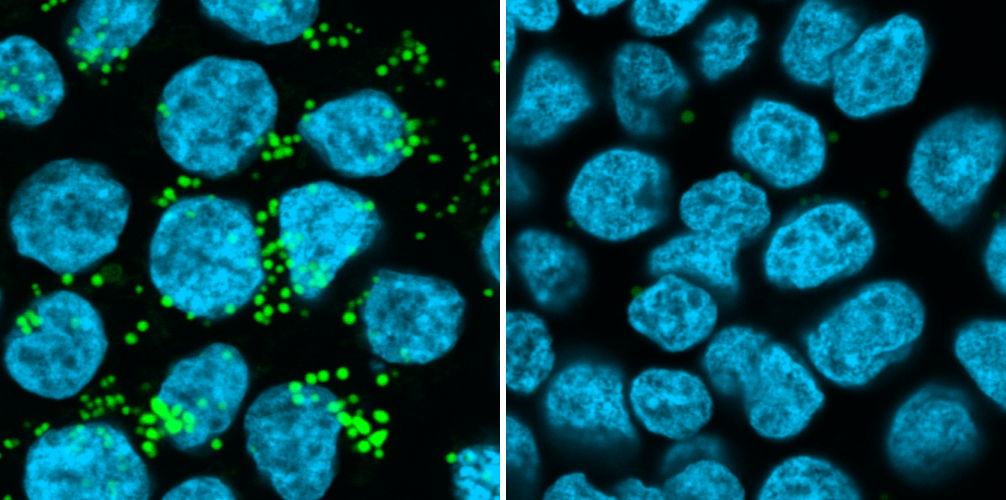
Most of the energy in our bodies is stored in fat molecules called triglycerides. These lipids are found in our food, and our bodies can produce them as well. When getting your cholesterol levels checked, doctors also have the triglycerides in your blood measured. High levels of triglycerides in the blood are linked to an increased risk of cardiovascular disease. So there are plenty of reasons to uncover the details of how our bodies handle these substances.
Lipid production
Decades ago, scientists already clarified how our cells produce these lipids and which proteins are involved. However, some single-celled organisms appeared to produce triglycerides in additional ways. So why couldn't humans? Gian-Luca McLelland from Thijn Brummelkamp's research group at the Netherlands Cancer Institute decided to investigate further.
Detour
This turned out to be an exciting quest, and the researchers are now publishing their results in the scientific journal Nature. They first disabled the well-known production route* in human cells, causing them to stop the production of triglycerides. Through clever puzzling, they then discovered a detour that allowed these cells to keep creating these lipids. They unraveled this detour using Thijn's research method involving haploid cells (see below), which has proven useful many times in the past.
The engine behind this detour turned out to be a protein, its exact function previously unknown. The researchers gave it a fitting name: DIESL**, an abbreviation of its complex biochemical name.
Uncharted territory
"This was uncharted territory, and extremely exciting," Thijn explains. "We essentially erased known factors from a cell and observed the effects. It's wonderful when this leads you to find something that is both important and new. I expect that many scientists will be pursuing this exploration further."