search

menu

  • Research Research
    • Where science meets inspired minds

    • Back
    • Research
    • Our Science
    • Research Groups
    • Facilities & Platforms
    • Clinical research
    • Find a researcher
    • Publications
    • Knowledge Transfer
  • Careers & study Careers & study
    • Become a leader in cancer research

    • Back
    • Careers & study
    • Vacancies
    • Faculty
    • Scientific staff
    • Scientific support staff
    • Postdoctoral fellows
    • PhD Students
    • Operational staff
    • Clinical fellows
    • Life in Amsterdam
    • Student internships
  • News & Events News & Events
    • Check out our stories and events

    • Back
    • News & Events
    • News
    • Media & Press
    • Calendar
  • About us About us
    • Maximum impact for cancer patients

    • Back
    • About us
    • Our vision
    • Organization
    • Collaborations
    • Responsible Research
    • Support us
    • Visit us
    • Contact us
  • Support us
Support us
  • Home
  • Image-guided Therapy
  • Research
  • Our Science
  • Image-guided Therapy
  • How can we optimize the quality, speed and costs of (bio)medical images?

How can we optimize the quality, speed and costs of (bio)medical images?

With better (bio)medical imaging, we can improve the precision of our cancer treatments – surgery, radiotherapy, and drug therapies. Ideally, you want to be able to create and use real-time imaging during a procedure. Our current imaging takes too long to be able to facilitate this. So we aim to optimize the speed. And the cost, so we can increase the use of imaging. And by improving the quality of our imaging and developing new imaging techniques, we create a clearer picture of the condition while being more precise in our treatment. 


Hyperspectrale Camera

Hyperspectral camera

We are investigating the application of hyperspectral cameras to increase cancer surgeries. We want to use this technique, which originated in geology and space travel, in breast cancer surgery. Using light, these cameras can distinguish between tumor tissue and regular tissue. We are investigating whether this can help us determine whether the margins still contain cancer cells during the procedure itself, so we know whether sufficient tissue has been removed. That is an improvement over our current technique in which a pathologist analyzes the tissue in hindsight and patients have to undergo another surgical procedure if the margins contain cancer cells.
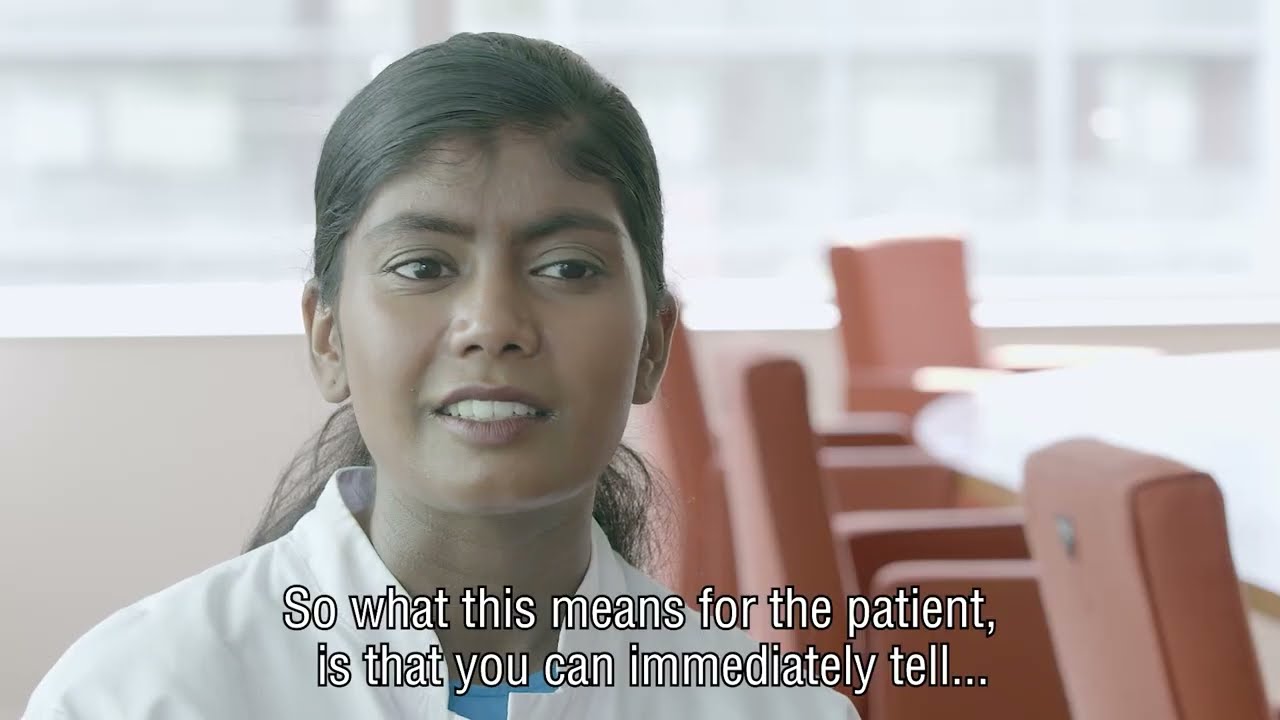
YouTube image

Hyperspectral imaging

Better medical imaging can help us improve diagnostics and treatment for patients. One way to improve imaging is through research on hyperspectral imaging in the operating room. Dinusha Veluponnar explains more in this video.

Accept cookies to play the video

Or watch the video on YouTube

Borstkanker Mamma

Faster MRI scans

We are investigating the possibilities to speed up MRI with, for example, artificial intelligence. Faster MRI scans would not only be cheaper, they would also allow for much more advanced real-time applications. They could facilitate a way to continuously monitor the patients and act according to the results of the scan. Researchers are working on the development of a ‘smarter’ and shorter MRI, which could make MRI suitable for the early detection of breast cancer.

Research groups involved

Surgical Naviagtion

Theo Ruers

Van Der Heide

Uulke Van der Heide

Sonke

Jan-Jakob Sonke

New group leader Jonas Teuwen uses algorithms in fight against cancer.

Jonas Teuwen

Where science meets inspired minds

Contact

Plesmanlaan 121
1066CX Amsterdam

020 512 9111 communicatie@nki.nl

Quick links

  • Vacancies
  • News
  • Contact us
  • Media & Press

Follow us on

Disclaimer
Privacy statement
Cookies
Change cookie settings

This site uses cookies

This website uses cookies to ensure you get the best experience on our website.