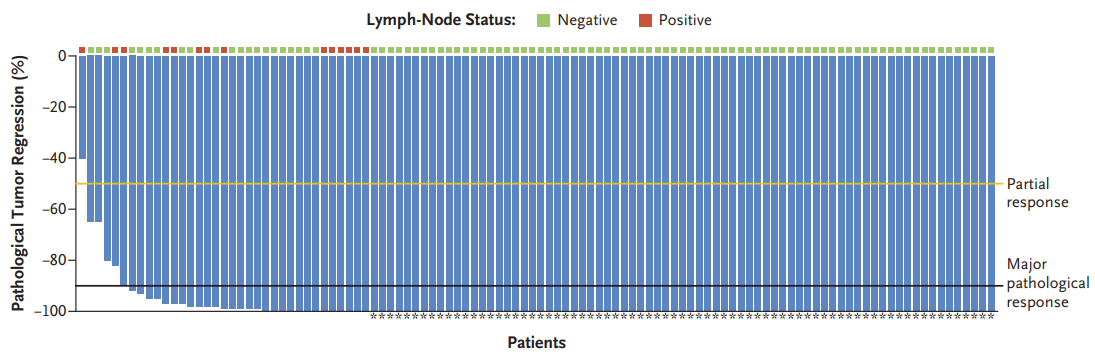
A short course of immunotherapy was found to be highly effective in a subset of patients with colon cancer. The treatment, which consisted of two cycles of immunotherapy prior to surgery, was effective in almost all patients. In two third of patients, there were no longer any live tumor cells at the time of surgery. The patients’ immune system had cleaned up the cancer cells. These groundbreaking discoveries were made as part of the NICHE-2 trial at the Netherlands Cancer Institute and have been published in the New England Journal of Medicine.
Patients with colon cancer with a specific genetic makeup, known as mismatch-repair deficient (dMMR) or microsatellite instable (MSI) were treated with one cycle of ipilimumab and two cycles of nivolumab. In 95% of patients, the tumor was either complete or almost completely gone, which was measured as 10% or less cancer cells found at the time of surgery. In 68% of patients there were no live cancer cells.“This specific type of colorectal cancer contains a high number of DNA errors, which means that the tumor cells are more easily detected by the immune system. The immune system only requires a small incentive to successfully target the tumor cells,” Chalabi says to explain the success of the treatment. Equally important, none of the patients had developed metastases in the average of two years that they have been followed so far.